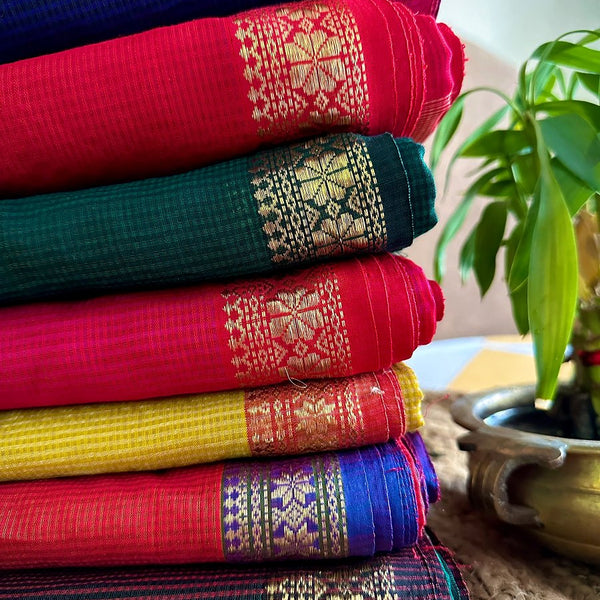


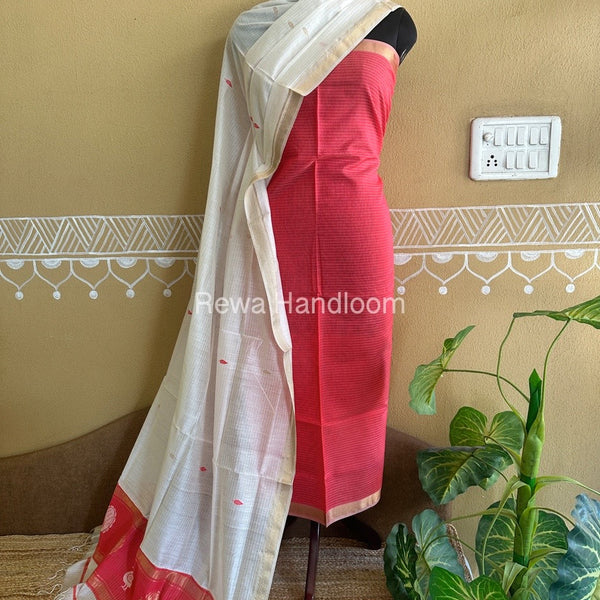
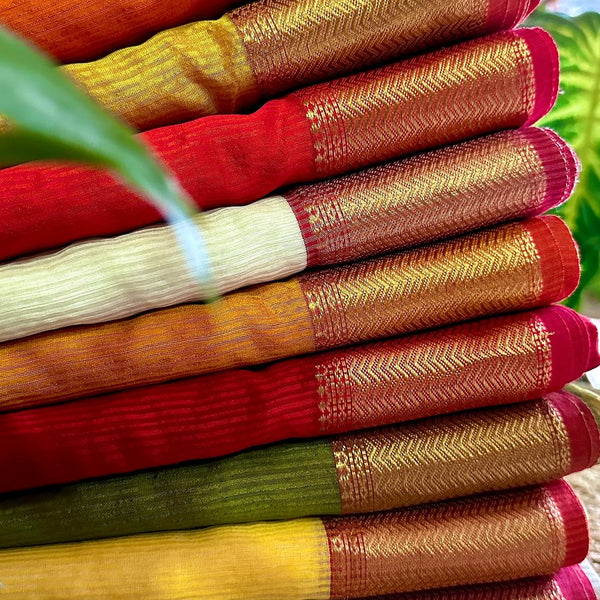
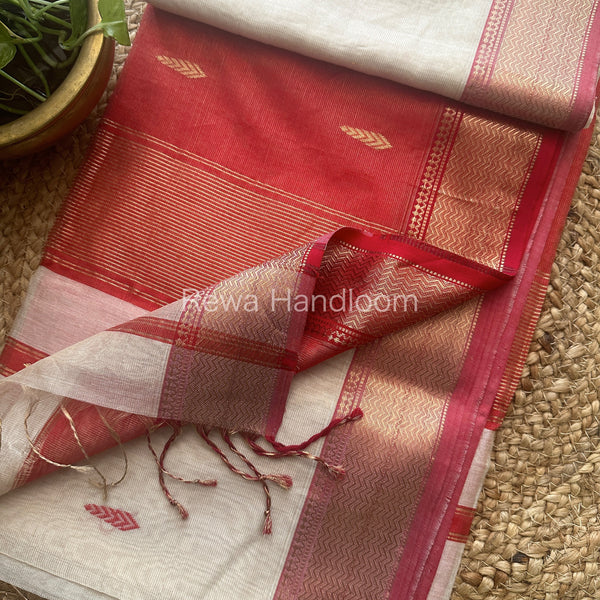






More about Chanderi Sarees Weaving
The Story Behind Chanderi Sarees
Chanderi weaving is believed to be more than 700 to 1,000 years old, making it one of India’s oldest and most respected handloom traditions. Born in the historic town of Chanderi in Madhya Pradesh.
Although the exact beginning of Chanderi weaving is not precisely documented, historians believe the weaving tradition existed as early as the 11th century during the rule of the Pratihara and Chandela dynasties. Over the centuries, the art evolved under the influence of Rajput rulers, Mughal patronage, and skilled local weaving communities.
Historically, the weaving was mainly carried forward by the Koshti weaver community, along with Muslim Momin weavers, who passed the craft from one generation to another through handmade techniques and traditional knowledge.
These sarees carry centuries of weaving tradition within their folds. Once loved by royal families and queens for its luxurious feel and airy comfort, Chanderi weaving became a symbol of refined Indian craftsmanship.
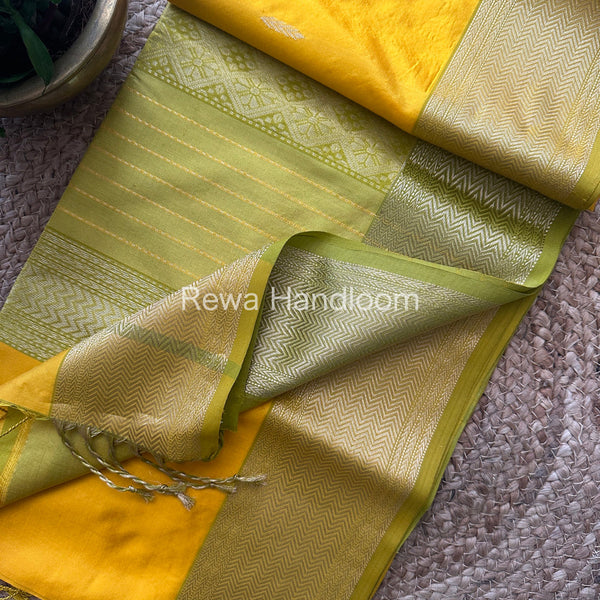
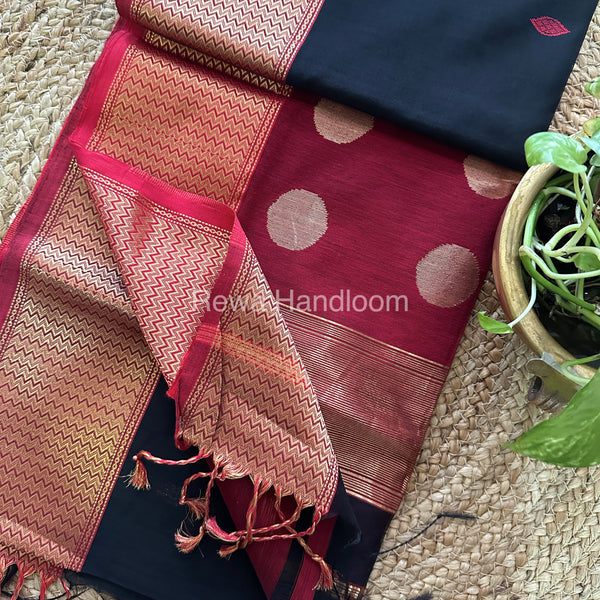
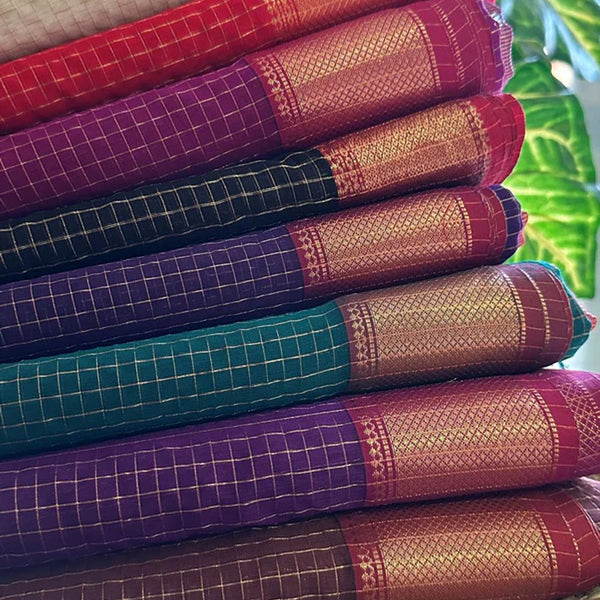
Chanderi Sarees are mainly made in two popular materials: the first one is Silk Cotton, and the second one is Katan Silk (Derived from Mulberry Silk), but nowadays, as modern exclusivity, Chanderi Sarees are also made in Pattu Silk as well.
What Makes an Authentic Chanderi Saree Special?
An original handwoven Chanderi Saree can often be recognized by its:
- Lightweight and airy feel
- Fine weaving texture
- Soft natural shine
- Elegant drape
- Handcrafted motifs
- Comfortable all-day wear
Unlike machine-made fabrics, authentic handloom Chanderi carries the warmth of human craftsmanship — every weave reflects the patience and artistry of skilled Indian weavers.
